AI Forecasting Analytics Lab

Forecast the future with data. Support decisions with AI.

A generative-AI research lab whose work spans social sciences (business & economics), life sciences, rehabilitation (sports, psychology & art therapy), nursing, pharmacy & medicine, and engineering — we study generative AI that applies to every field, and turn research into deployable tools. Led by Prof. Dae Keun Park, CHA University.

25+Publications
6Research areas
19Deployed AI portals
12Advised students
16AI-integrated courses
Watch

Lab Introduction

A 45-second overview of the lab, narrated by an AI avatar.

Research

Research Areas

Six threads spanning prediction, causal inference, and decision support.

Text & Media Big-Data Analytics

Semantic-network analysis, topic modeling, churnalism, and crisis communication over large news corpora.

Bio-Healthcare Machine Learning

Multi-task and interpretable models for pharmacokinetics (drug clearance, volume of distribution) and multi-outcome clinical risk prediction.

Generative-AI Applications

Embedding-based ESG analysis and trust-by-design RAG avatar chatbots that turn LLMs onto domain problems.

Pension & Policy Microsimulation

Microsimulation and Monte-Carlo models for the Basic Pension, National Pension unfunded liability, and welfare/tax policy.

Corporate Finance, Accounting & ESG

How dividends, executive stock-linked pay, debt maturity, bond ratings, and ESG / tax-evasion news move firm value.

Financial & Economic Forecasting

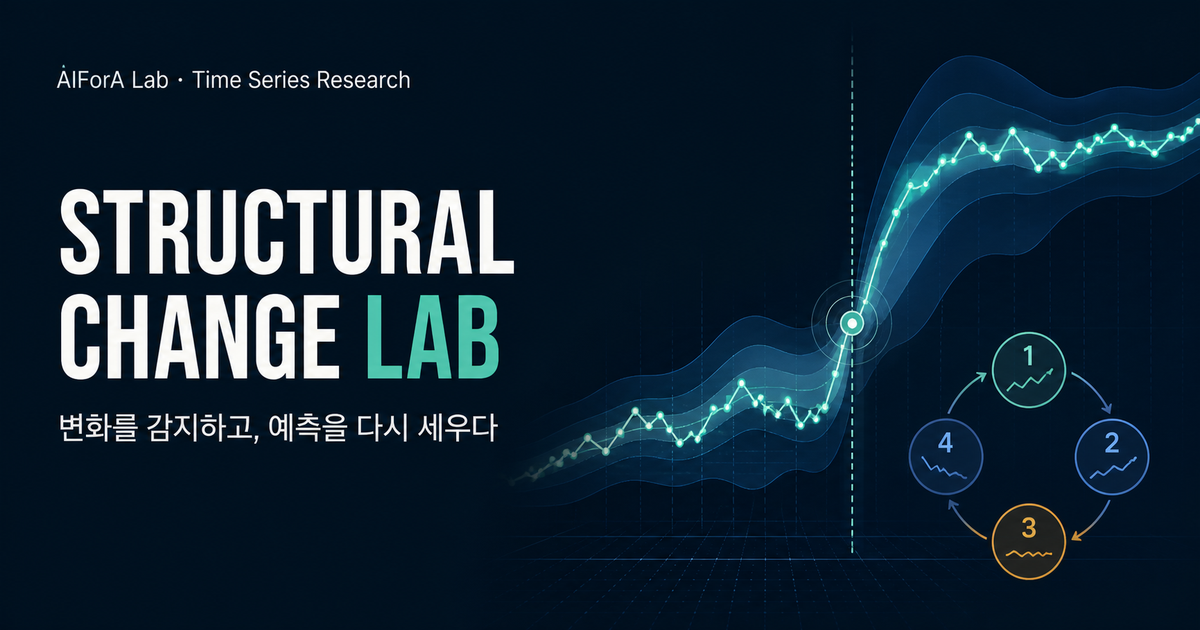
Unit-root and level-change testing, long-horizon mean reversion, and structural-change detection to model and forecast markets and macro series.

Publications

Selected Publications

Grouped by research area. Click any paper to expand its topic, methodology, and results — each lists its published journal.

Text & Media Big-Data Analytics8

AI-Data-Based Art-Therapy Convergence MajorJ. of Learner-Centered Curriculum & Instruction, 20(19), 2020
TopicDesigning a convergence major that fuses art therapy with AI and data skills for the 4th industrial revolution.
MethodologySurveyed 113 art-therapy students with frequency and regression analysis, plus morphological keyword analysis of open-ended responses.
ResultsStudents saw AI-data convergence as a key opportunity; prior awareness and AI-data knowledge shaped major choice, yielding a proposed six-semester curriculum.
Have the Elderly Really Changed? The 'Active Senior'Korean J. of Communication Studies, 24(2), 2025
TopicWhether an economically- and digitally-capable 'active senior' cohort is emerging in Korea.
MethodologyMerged 10 years (2014–2023) of Financial-Panel and media-audience data across six age groups for time-series comparison.
ResultsThe 55–74 groups narrowed leisure/telecom-spend and portal/TV-news gaps versus 45–54 while wealth-income gaps widened — evidence of active seniors.
Older Adults' Political Orientation in the Digital-Transformation EraKorean J. of Journalism & Communication Studies, 69(2), 2025
TopicThe interplay of digital literacy, online participation, and political orientation among older adults.
Methodology2020–2023 Korea Media Panel and Press-Foundation data analyzed with statistical matching.
ResultsOlder adults (especially 55–64) improved digital competencies and narrowed the gap with younger cohorts, with associated shifts in engagement and political preference.
China-Market Distribution & Tourism Strategy via Big-DataKorea Logistics Review, 27(2), 2017
TopicStrategy to attract Chinese tourists to Korea's distribution and tourism sectors.
MethodologyText-network (semantic) analysis of 2015 news containing 'China' and 'tourism', extracting centrality and topic clusters.
ResultsMarketing centered on duty-free/hospitality (Seoul-biased) while destination and cultural value were under-leveraged — recommends stronger linkage, regional diversification, and active Hallyu use.
Positive/Negative Milk-Consumption News Topics via Generative AIHealth Communication Research, 23(2), 2024
TopicMapping positive and negative issues around milk consumption in the news.
MethodologyGenerative-AI semantic-network and topic modeling over 1,338 milk-related articles across five years.
ResultsPositive topics (health, safety, sustainable/subscription consumption, protein products, logistics) and negative ones (declining consumption, plant-based substitutes, price rises, low birthrate, COVID) — insight for dairy policy.
Semantic-Network Analysis of Community-Sports News in Aged RegionsJ. of Korea Society for Wellness, 2026
TopicCommunity-sports news topics across ten aging and super-aged cities in northern Gyeonggi Province.
MethodologySemantic-network analysis of community-sports news coverage.
ResultsSurfaces latent resident policy demands beyond the usual supplier-centric view, supporting region- and lifecycle-tailored community-sports policy.
Role of K-Culture for the Vietnam Market after COVID-19J. of Product Research, 39(6), 2021
TopicLeveraging Hallyu (K-culture) to appeal to the Vietnamese market after COVID-19.
MethodologyMorphological and text-network analysis of five years of 'Vietnam tourist' news.
ResultsKorea–Vietnam is strongly linked via football/sports, but the Hallyu–product/retail linkage is weak — recommends Hallyu-linked hit products and systematic promotion.
Organizational Communication in Early COVID-19: 34 UniversitiesJ. of Practical Advertising & PR, 16(3), 2023
TopicCrisis-response communication of organizations in the early COVID-19 period.
MethodologySMCRE-model analysis of 1,761 messages from 34 Korean universities over six months.
ResultsMetro-area and large universities communicated crisis response and stakeholder safety more promptly, via president-level sources and dedicated COVID channels.

Bio-Healthcare Machine Learning2

Multi-Task Gradient Boosting with Multi-Modal Molecular RepresentationsPLOS One, 21(4), 2026
TopicPredicting two pharmacokinetic parameters — drug clearance and volume of distribution — simultaneously.
MethodologyMulti-task gradient boosting over multi-modal molecular representations.
ResultsAccurate, scalable, and interpretable simultaneous PK prediction directly from chemical structure.
Multicenter Validation of a Scalable, Interpretable, Multitask Clinical Prediction Modelnpj Digital Medicine (Nature), 8:583, 2025
TopicPredicting multiple post-operative complications together rather than one at a time.
MethodologyTree-based multitask learning on 16 routine preoperative EHR features, externally validated across cohorts.
ResultsAUROCs ~0.81 (AKI), ~0.89–0.93 (respiratory failure), ~0.85–0.91 (mortality), with interpretable per-variable contributions.

Generative-AI Applications2

Domestic Applicability of SASB ESG Issues via Generative-AI EmbeddingJ. of the Korean OR/MS Society, 50(3), 2025
TopicWhether SASB's industry-specific ESG issues fit Korean industries, using healthcare as the case.
MethodologyGenerative-AI sentence embeddings to classify corporate healthcare news and surface recurrent issues.
ResultsNews-based ESG salience aligns significantly with SASB (p<0.05), yet some domestically distinct issues reveal industry- and region-specific peculiarity.
Trust-by-Design of an Avatar Chatbot for Major/Career AdvisingJ. of Digital Contents Society, 26(12), 2025
TopicIntegrating multi-layered trust signals into a multimodal RAG avatar chatbot for major and career advising.
MethodologyDerived trust signals across identity, response quality, interaction naturalness, and operational-policy transparency, then measured user perception.
ResultsPolicy-transparency signals were perceived most strongly while affective response quality lagged the cognitive side, pinpointing where trust design breaks down.

Pension & Policy Microsimulation4

Empirical Analysis on the Elasticity of Tax Revenue in KoreaKorean Economic Forum (formerly Yonsei Economic Studies), 22(1), 2015
TopicEstimating the elasticity of national tax revenue with respect to its economic base.
MethodologyEmpirical elasticity analysis of Korean tax-revenue and macroeconomic data.
ResultsQuantifies how responsive tax revenue is to the base, informing revenue forecasting and fiscal-policy design.
Effects of Basic-Pension Changes on Income Distribution and PovertyKorean Association of Public Finance, 2018 Autumn Conference Proceedings
TopicDistributional and poverty effects of Korea's Basic Pension reforms.
MethodologyMicrosimulation on the 10th Financial-Panel, comparing no-pension, current, and reformed scenarios.
ResultsThe Basic Pension improved income distribution (Gini, quintile ratio) and reduced poverty; benefit-level hikes helped only modestly.
Crowding-Out of Livelihood Benefits on the Basic Pension's EffectJ. of Fiscal Policy, 23(4), 2021
TopicWhether livelihood-benefit crowd-out weakens the Basic Pension's redistribution and poverty relief.
MethodologyMicrosimulation on the 13th Financial-Panel.
ResultsThe Basic Pension substantially improves redistribution and reduces poverty; recent reforms and the crowd-out effect are small because few households receive both benefits.
Probabilistic Estimation of the National Pension's Unfunded LiabilityJ. of Pension Studies, 15(1), 2025
TopicQuantifying the uncertainty in the National Pension's unfunded liability.
MethodologyMonte-Carlo simulation over policy scenarios (replacement and contribution rates) and environment scenarios (wage growth, benefit growth, discount rate).
ResultsProduces a full probability distribution instead of a single point estimate — a risk-based tool for pension-reform design.

Corporate Finance, Accounting & ESG5

Effects of Temporary Earnings on Dividends in KoreaApplied Economics Letters (Taylor & Francis), 29(21), 2044–2046, 2022
TopicHow temporary (transitory) earnings affect corporate dividend policy in Korea.
MethodologyAnalyzed cash-dividend data of Korean firms from 2001 to 2017, split by debt type.
ResultsPrivate-debt-only firms raise dividends with temporary earnings (dampened by investment opportunities); public-debt firms do not — supporting precautionary-savings and signaling hypotheses.
Effects of Incentive Alignment on Debt Maturity StructureJ. of Insurance and Finance, 23(3), 2012
TopicWhether executive stock-linked pay (incentive alignment) shapes corporate debt maturity.
MethodologyAnalyzed interactions of managerial ownership with liquidity risk and investment opportunities.
ResultsOwnership shortens maturity when liquidity risk is low but lengthens it when high; high-growth firms prefer short-term debt — consistent with the under-investment hypothesis.
Negative ESG News and Firm ValueKorean J. of Broadcasting & Telecommunication Studies, 38(4), 2024
TopicThe effect of negative ESG news coverage on firm value (market-to-book ratio).
MethodologyWeb-scraping plus the ChatGPT-4.0 API to classify 30,098 negative ESG articles for 1,845 listed firms (2019–2022); panel regression.
ResultsNegative ESG news significantly lowers MTB, driven mainly by Governance issues, and strongest in healthcare/pharma, chemicals, and finance.
Tax-Evasion Controversy and Firm Value via Big-DataJ. of Internet Computing and Services, 22(6), 2021
TopicWhether tax-evasion controversy in portal news erodes firm value.
MethodologyCrawled portal news to build per-firm keyword-frequency time series; panel regression and impulse-response analysis.
ResultsHigher controversy frequency lowers firm value, with the effect decaying gradually over about 12 months.
Determinants of Corporate-Bond Rating DisagreementJ. of Korean Economic Studies, 33(2), 2015
TopicWhy credit-rating agencies disagree on the same corporate bond.
MethodologyEmpirical analysis relating split ratings to issuer financial characteristics and information asymmetry.
ResultsIdentifies the factors that drive rating disagreement, with implications for bond pricing and rating quality.

Financial & Economic Forecasting4

A Simultaneous Test of Unit Root and Level ChangeJournal of Forecasting (Wiley), 29, 301–312, 2010
TopicDistinguishing whether a time series has a unit root, a level change, or both — usually tested separately.
MethodologyDerived a likelihood-ratio test from a state-space model, with null distributions built by simulation.
ResultsThe joint test identifies the true underlying structure; validated on simulations and two Korean macroeconomic series.
Distribution-Based Level Change Detection in a Random-Level Forecasting ModelJ. of the Korean Institute of Industrial Engineers, 43(4), 2017
TopicUnexpected level changes cause persistent forecasting errors in macro and financial series.
MethodologyDerived the correct statistical distribution of the level-change statistic and adapted the forecasting equation accordingly.
ResultsImproved change detection and forecast accuracy, validated on simulations and two empirical cases.
Long-Term Mean Reversion of Stock Prices Based on Fractional IntegrationInternational Journal of Management Science, 17(2), 2011
TopicThe very-long-horizon behavior of stock returns versus random-walk models.
MethodologyIntroduced a fractionally integrated process into the nonstationary component of a stock-price model and tested NYSE returns.
ResultsNegative autocorrelations persist up to ~10 years, implying market inefficiency can last far longer than random-walk models predict.
Pairs-Trading Algorithm with Structural-Change DetectionJ. of the Korean OR/MS Society, 42(3), 2017
TopicImproving pairs-trading performance by handling structural breaks in cointegration.
MethodologyEmbedded a structural-change detection procedure (cointegration breaks, unit-root tests) into the algorithm, tested by simulation and empirics.
ResultsOutperforms the baseline on risk-adjusted return, with a steady upward cumulative P/L at low variance.
Education

AI-Integrated Courses

Graduate, liberal-arts, and undergraduate courses where students build generative-AI tools themselves.

Graduate
  • AI Convergence Research Methodology
  • Unstructured Data Analysis with Generative AI
  • Generative AI & Bio-Computing
  • Time-Series Forecasting with AI
Liberal Arts (build-your-own)
  • Build Your Own Investment Portfolio
  • Build Your Own Smart Bot
  • Build Your Own Blockchain Cryptocurrency
  • Build Your Own Generative-AI Business Model
Undergraduate · Finance & Accounting Track
  • Financial Management
  • Financial Markets
  • Investments
  • Financial Analysis & Valuation
Undergraduate · Business Analytics Track
  • Business Statistics
  • Business Analytics
  • Big-Data Analytics for Management
  • Financial Big-Data Analytics
Projects

Deployed Research Portals

Beyond papers — portals, bots, and dashboards people can actually use.

Global Business AI (GBA) Bot

AI assistant (avatar / voice / text) for CHA University's Global Business AI major.

Financial-Products Consultant

AI consultant across 11 categories and 72 financial products, with a navigable product catalog and voice / avatar modes.

Hanwoo Market AI Portal

Korean-beef market forecasting and an AI newsroom — market-analysis chat, P10/P50/P90 price forecast, a public-data dashboard, and a 5-model LLM news studio.

Real Value-Added Forecasting — Research Program

Industry real value-added forecasting, from AR/VAR/BVAR foundations to scenario projections. Two papers — 36-industry quarterly and 70-industry monthly (mixed-frequency SSM) — with a reproducible, chapter-by-chapter walkthrough.

Blood-Pressure Analysis Storybook

An illustrated book on blood-pressure interpolation, estimation, and prediction — from data to models.

SRT Securitization Study

Significant Risk Transfer (SRT) securitization and bank capital-relief — empirical study + explainer.

Liquor Tax Research & Storybook

Ad-valorem vs. specific liquor taxation and price elasticity, told through illustrated storybooks and a research plan.

Portal-News Churnalism Analysis

Measuring cross-outlet news-story synchronization and duplication across Korean news portals.

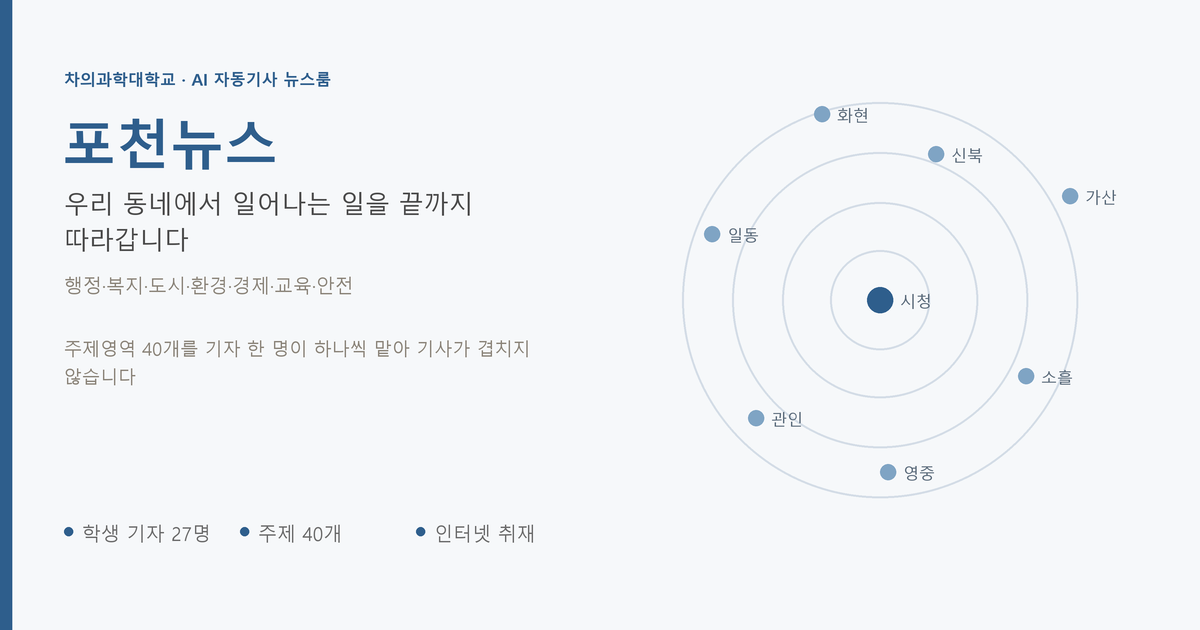
Pocheon News — AI Newsroom

A local AI newsroom that rewrites hard news to be easy to read, with trust built into the system.

CAFA6 Protein-Function Prediction

Bioinformatics portal for protein-function prediction (CAFA6, v2.0).

Tacrolimus Research Portal

Pharmacokinetics research portal for the immunosuppressant tacrolimus.

Dementia-Prevention Cognitive Training

Cognitive-training games and an avatar guide for dementia prevention.

GreenCart — Low-Carbon Shopping

A low-carbon livestock shopping concept for a greener planet.

AX War Room

An integrated AI-transformation (AX) command portal.

AI-University Readiness Self-Assessment

A self-diagnosis tool measuring readiness for an AI-centered university.

Academic Affairs AX Portal

All-in-one academic portal: student/faculty/TA chatbots (regulations · majors · graduation), department dashboard, unified approval inbox — plus system overview, prior-research review, and an always-on FGI evaluation survey.

RISE Startup-Curriculum Report

Research report on developing RISE entrepreneurship curriculum.

8 Seconds Later — AI Tech Drama

Teaser and concept site for a 12-episode AI tech drama.

Math Study Room — Demand-Driven Math

Interactive math explained to each learner's needs — calculus, probability, game theory, DSGE, stochastic processes, and more.

People

Advised Students

Graduate students advised by Prof. Dae Keun Park — all aspiring AI Healthcare Convergence Architects. The lab reaches across social sciences (business & economics), life sciences, rehabilitation (sports, psychology & art therapy), nursing, pharmacy & medicine, and engineering — studying generative AI that applies to every one of these fields.

Prof. Dae Keun Park
Principal Investigator
Prof. Dae Keun Park
CHA University · dkpark@cha.ac.kr
PhD Candidates · 4
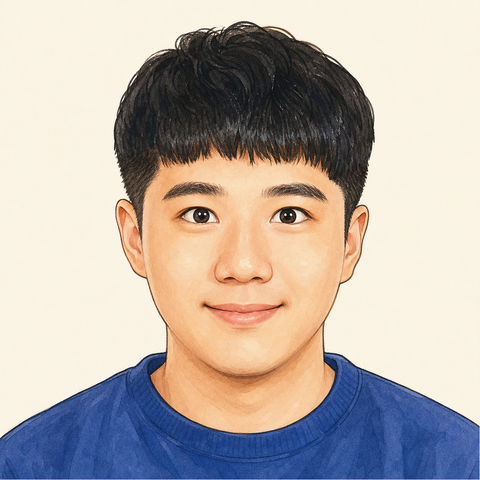
Yu Seung Kim
Yu Seung Kim
Hyper-Personalization
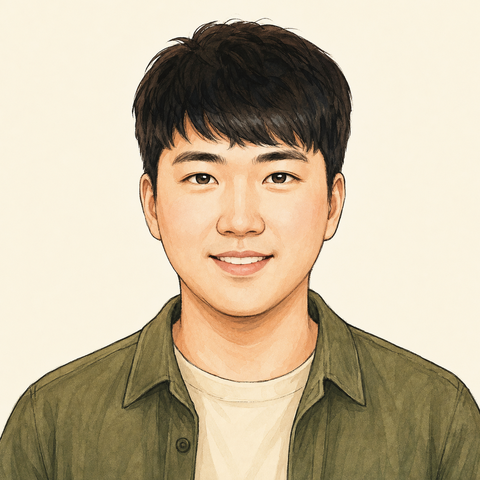
Kyung Tae Kim
Kyung Tae Kim
Medical AI
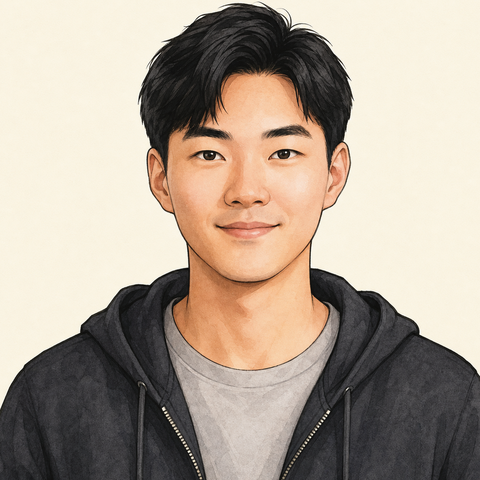
Dae Hyun Kim
Dae Hyun Kim
Physical AI
Sang Hyun Cha
Sang Hyun Cha
AI Forecasting Modeling
M.S. Candidates · 8
Gyu Seong Lee
Gyu Seong Lee
AI Forecasting Modeling
Hyeong Gyu Choi
Hyeong Gyu Choi
AI Forecasting Modeling
Bong Ju Sung
Bong Ju Sung
Intelligent Bot Development
Jeong Ho Kim
Jeong Ho Kim
Psychology
Ji Hye Park
Ji Hye Park
Media Communication
Ye Won Choi
Ye Won Choi
Exercise Therapy
Yu Yeon Jang
Yu Yeon Jang
Exercise Therapy
Lingling Zhang
Lingling Zhang
Nursing
Vision

Direction & Vision

Toward a decision-support lab that treats generative AI as a default tool for research and teaching. (Draft — being refined.)

1

Generative-AI-native research

Use embedding-based analysis and LLM agents / domain-specific bots to support decisions in finance, policy, and healthcare.

2

Deeper convergence

Combine financial time-series forecasting with bio-computing, and sharpen structural-change detection and microsimulation with AI.

3

Research as a product

Turn published findings into deployable portals, dashboards, and chatbots — the live portals on aiforalab.com are the proof.

Ask the Lab

AI Assistant

Ask anything about the lab's research, publications, courses, projects, or vision. Korean and English both work.

AI
Lab Assistant
● Online
What does this lab work on?
Summarize the ESG-news research
Which AI-integrated courses are offered?
What is the lab's future vision?